

Essential Elements for a High-Quality Website
- Jan 14
- 2 min read
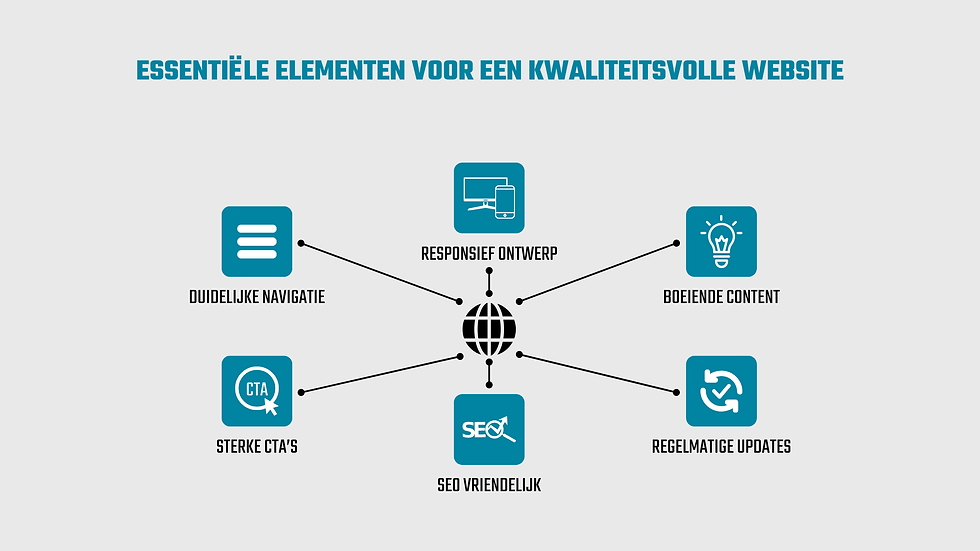
You never get a second chance to make a first impression online. A high-quality website is much more than just a digital business card; it is a powerful tool to convey your message, strengthen your brand, and achieve your goals. But what exactly makes a website successful? Let's dive into the essential elements for a high-quality website that directly contribute to your online success.
1. Clear Navigation: One of the Essential Elements for a High-Quality Website
Online, people want everything to be effortless; visitors have little patience and don't want to struggle to find information. An intuitive navigation structure is crucial for guiding visitors through your website. Ensure an organized menu that is easy to find and use. Use logical categories and labels to organize content, and avoid deep navigation structures that can complicate the user experience.
2. Responsive Design
With the growing use of mobile devices, a responsive design is no longer an option, but a requirement. Take a look at yourself. On which screen are you reading this blog post? On your smartphone, a tablet, a computer screen, or perhaps even an ultrawide display? Every screen has a different size and resolution, meaning your website looks different on every device.
A responsive website automatically adapts to the user's screen. Text remains readable, images scale correctly, and navigation stays clear, regardless of the device. This ensures a better user experience, a professional appearance, and better performance in search engines.
3. Engaging Content
Interesting content is vital for attracting and retaining visitors. Ensure relevant, engaging, and well-written text, complemented by visually appealing images or videos. Provide value to your audience by sharing informative blogs, useful tips, or inspiring stories.
4. Strong Call-to-Actions (CTAs)
Direct your visitors toward the actions you want them to take with clear and attractive CTAs. Whether it’s signing up for a newsletter, placing an order, or requesting more information, make sure your CTAs stand out and are easy to find on your website. By testing different wording, colors, and placements, you will discover which CTAs work best for your product or service and what encourages your visitors the most to take action.
5. SEO-friendliness
There is little point in building a website if it cannot be found online. Visibility is essential for attracting visitors and growing your online presence. Therefore, it is important to optimize your website for search engines. Use relevant keywords in your content, optimize titles and meta-tags, and ensure a clear and logical URL structure. By following SEO best practices, you increase your website's visibility and attract more potential customers. These optimization techniques also remain crucial for visibility in LLMs, often referred to as GEO (Generative Engine Optimization).
6. Regular Updates
Keep your website fresh and relevant by regularly adding new content and updating existing information. This shows that you are actively engaged with your audience and helps improve your ranking. By focusing on these essential elements for a high-quality website, you build a sustainable digital platform that truly works for your business.


